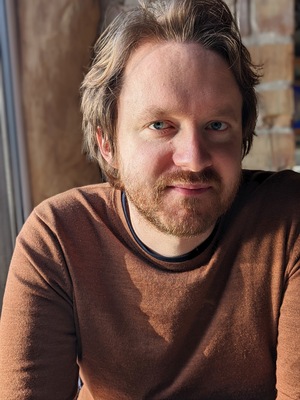
Ondřej Zíka#
Hi!
I am currently an assistant professor at University College Dublin, Ireland 🇮🇪, where I head the Uncertain Mind Lab (UMI). My research interests evolve around understanding how uncertainty impacts human decisions and how it relates to aspects of mental health (anxiety, depression, eating disorders) and development. I am also interested in ways in which we can combine AI with longitudinal and multimodal approaches to improve prevention and diagnosis of mental health conditions. To study these topics I use range of experimental and computational methods (reinforcement learning, Bayesian models) together with physiology (eye-tracking, skin conductance) and neuroimaging (M/EEG, fMRI).
I strive to make science inclusive and supportive for everyone. I very much welcome anyone reaching out with any questions or comments. I can be found here.
P.S.: ř is a great sound, I know. And no, I don’t expect anyone to try to pronounce it 🇨🇿:)
News#
September 2025: New chapter
I am very happy to announce that starting December 2025 I am joining University College Dublin as an Assistant Professor in Psychology ^^ At UCD, I will head the Uncertain Mind Lab which will focus on investigating computational and neural mechanisms of uncertainty, and how these drive aspects of mental health. The lab will combine lab experiments, with real-world studies and longitudinal designs, including online studies, EEG, VR and motion-tracking.
If you are interested in these topics for a postdoc / PhD, do get in touch!
July 2024: Talk at BAP 2024!
I recently gave a short interview to Mental Elf about my talk at the British Association for Psychopharmacology Annual Meeting (BAP). We briefly discuss how uncertainty generates moments of ambiguity about the causal structure of the world and how perhaps anxious individuals tend to fill in information to reduce the uneasing sense of uncertainty. We also discuss how this can sometimes result in wrong interpretation of for example social cues in anxiety. This is largely based on our recent paper.